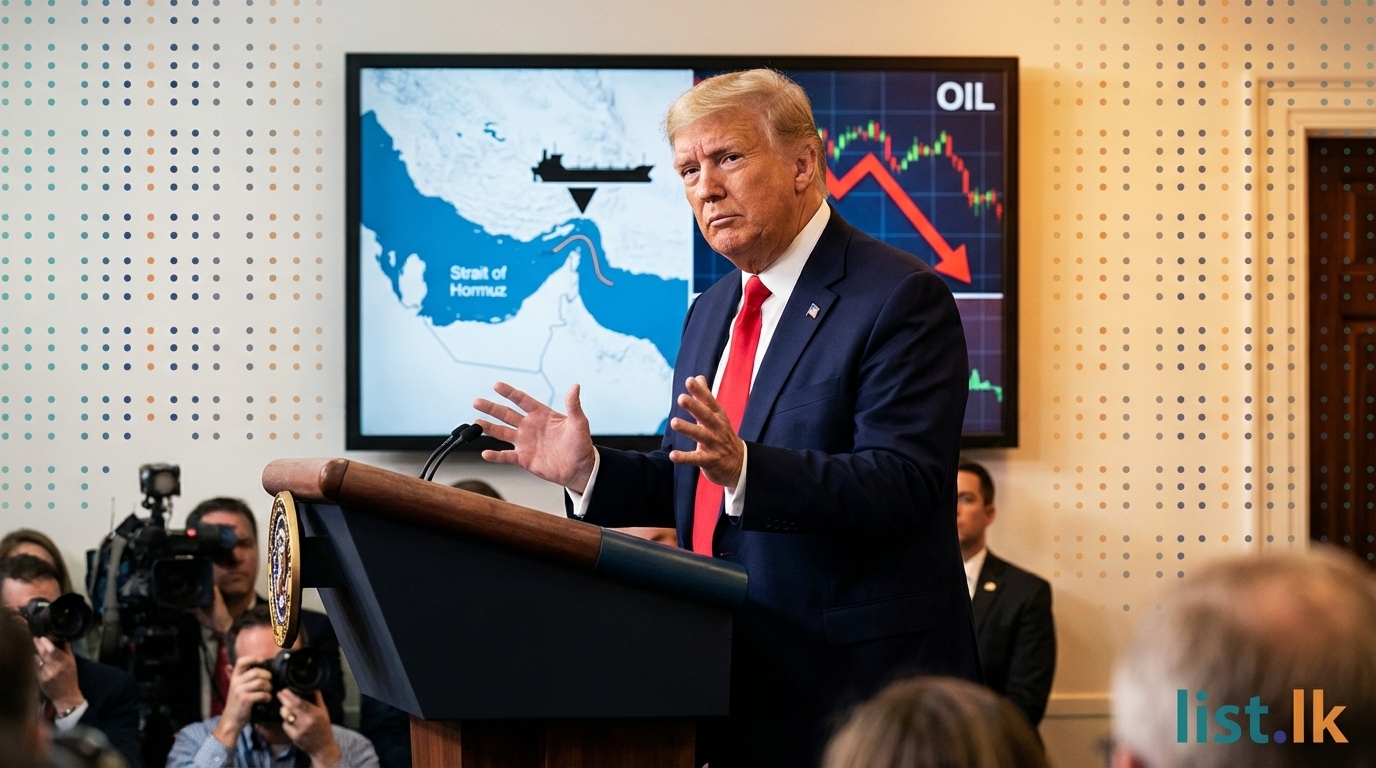
The protracted conflict between the United States and Iran, spanning over seven weeks, has seen a volatile mix of military strikes, naval blockades, and diplomatic efforts. An initial two-week bilateral ceasefire, which began in early April, has now officially collapsed, with US President Donald Trump declaring an end to negotiations and ordering renewed attacks.
Trump's Evolving Ultimatums and Threats
From the outset, President Trump's rhetoric was marked by escalating ultimatums. He initially demanded no uranium enrichment and the removal of all deeply buried nuclear material from Iran, stating that crucial details were being discussed "behind closed doors." In an Address to the Nation on April 1, Trump justified the war as "necessary for the safety of America and the security of the free world," claiming Iran was losing and begging for a deal. He issued a 10-day grace period on attacks on Iranian energy plants (March 26/27 to April 6), followed by a 48-hour ultimatum for Iran to open the Strait of Hormuz or face severe destruction. On April 5, he warned of "Power Plant Day, and Bridge Day" on Tuesday. By April 7, Trump threatened to "take out" the entire country of Iran "in one night," setting a deadline for an acceptable deal by 20:00 Washington DC time (00:00 GMT Wednesday), after which Iran would be taken "back to the Stone Age." He later warned he could destroy Iran's "entire energy system and power generation centers in an hour" and on April 19, declared it Iran's "last chance" to agree to peace, threatening "very severe" consequences and the destruction of the "entire country." On April 21, Trump explicitly warned of resuming bombing Iran if a swift agreement was not reached by the end of the ceasefire. On May 3, he reiterated the possibility of restarting airstrikes if Tehran 'misbehaves,' and on May 5, threatened Iran would be 'blown off the face of the Earth' if it attacked American vessels in the Strait of Hormuz, linking this to 'Project Freedom' to reopen the Strait. On May 29, Trump dismissed reports of joint management of the Strait, stating Iran would "have to pay the price" for delayed negotiations, threatening new strikes on power plants and bridges.
Escalating Military Actions
The conflict has been characterized by significant military engagements from multiple parties:
* US Attacks: Reports indicated the US dropped 2,000-pound bunker-buster bombs on an Iranian weapons depot in Isfahan. On February 28, the US military reportedly used a new, untested ballistic missile in attacks on a school and sports hall in Lamerd (21 deaths) and a girls' primary school in Minab. On April 3, Trump confirmed the destruction of the B1 bridge in Karaj, claiming many Iranian military leaders were killed in attacks on Tehran. On April 19, Trump confirmed Iran violated the ceasefire by closing the Strait of Hormuz and firing on a French ship and a UK cargo ship. On April 20, the US seized an Iranian-flagged cargo ship near the Strait. On April 23, Trump ordered the US Navy to "shoot and kill any boat" laying mines in the Strait, claiming 159 Iranian vessels had been sunk. This order was reiterated on April 28 after reports of Iran attacking and seizing cargo ships. On May 5, the US military shot down seven Iranian boats. On May 7, the US military fired on an Iranian oil tanker in the Gulf of Oman. The US Central Command reported Iran attacked the USS Truxtun, USS Rafael Peralta, and USS Mason with missiles and drones, prompting US retaliatory attacks on Iranian military centers in Qeshm port, Bandar Abbas, and Bandar Korgan. Most recently, on July 8, 2026, following Iranian attacks on merchant ships, the US Central Command launched a new series of attacks on Iranian targets, including Bushehr (nuclear center), Bandar Abbas, and Sirik, on President Trump's direct order.
* Iranian Actions: On April 1, Iran launched its largest ballistic missile attack on Israel in weeks (at least 10 missiles). Iranian media reported an attack on a US military fuel depot on Bubiyan Island in Kuwait. Several large explosions were reported on Iran's Kharg Island, targeting its oil export hub. On May 6, Iran resumed attacks, breaking the ceasefire, including a drone attack on the main oil port of the United Arab Emirates. On July 8, 2026, the Iranian Revolutionary Guard Corps attacked three merchant ships in the Strait of Hormuz.
* Other Actors: The US-Israel joint operation against Iran was 34 days old as of April 2. Hezbollah launched its first attacks on Israeli targets on April 2. Yemen's Ansarullah movement and Houthi rebels offered support to Iran, threatening the Bab al-Mandeb Strait. Israel's Prime Minister Benjamin Netanyahu claimed responsibility for strikes on Iranian railways, bridges, transport aircraft, and helicopters. A nuclear power plant in the United Arab Emirates was attacked on May 18.
The Strait of Hormuz and Naval Blockade
The Strait of Hormuz has been a central point of contention, remaining almost completely blocked for approximately seven weeks. Iran, through General Ali Abdollahi Aliabadi, rejected Trump's ultimatums, with the IRGC declaring the Strait would "never again" be open to America and Israel. Iran's parliament approved drafting laws to impose transit fees in Iranian Rial and restrict naval traffic from sanctioned countries. Iran stated it would open the Strait if war damages were compensated. Trump initially disclaimed US responsibility for the Strait's security but later strongly opposed Iran charging fees. On April 11, Trump announced the Strait would open "fairly soon," and two US guided-missile destroyers successfully transited it for the first time since the war began, an operation not coordinated with Tehran. On April 12, following collapsed peace talks, the US Navy began a naval blockade of the Strait of Hormuz, targeting ships attempting to enter or leave, especially those paying tolls to Iran. This was followed by a blockade on Iranian ports starting April 13. Iran's Deputy Speaker Haji Babai declared Iran had full control of the Strait, calling it a "red line" and demanding fees in Rials. The IRGC warned that any military vessel approaching the Strait would be a ceasefire violation. Trump threatened to sink any Iranian ships approaching the US blockade. On April 17, Pentagon chief Pete Hegseth called the US blockade a "soft" policy. On April 18, Trump warned of resuming bombing if a permanent agreement wasn't reached and opposed Iran's fee attempts, stating Iran had reversed its decision to reopen the Strait. On April 21, Trump contradicted reports of lifting the blockade, stating it would remain until a deal was reached, claiming it was "absolutely destroying Iran." On April 29, Trump instructed aides to prepare for an extended US Naval blockade. On May 4, Iran warned US forces not to enter the Strait. On May 6, Trump announced the temporary suspension of 'Project Freedom' to allow for a deal, stating the naval blockade of the Strait would be lifted if an agreement was reached, but the blockade on Iranian ports would remain.
International Reactions and Diplomatic Efforts
Iranian President Masoud Pezeshkian expressed willingness to cease fighting with guarantees against future attacks and urged US citizens to look beyond "manufactured narratives." The IRGC threatened to target American tech firms. Pope Leo appealed to Trump for an "off-ramp." Britain deployed additional troops, but its Prime Minister Sir Keir Starmer and French President Emmanuel Macron planned an international coalition for freedom of navigation, diverging from US policy. Italy, France, and Spain refused support or airspace for US military operations, leading Trump to criticize these NATO allies. The US expressed concerns about China and Russia's support for Iran. China called for an immediate halt to military operations. Iran rejected a US 48-hour ceasefire proposal on April 1, demanding a "permanent and decisive end" to conflicts. Iran warned that if US aggressive actions expanded, the entire Middle East could turn into 'hell,' and its armed forces would "react in kind" to infrastructure attacks. 14 million Iranians, including President Pezeshkian, volunteered to sacrifice their lives, with civilians reportedly forming human shields near nuclear plants and bridges. The IRGC threatened to "deprive the U.S and its allies of the region’s oil and gas for years" if attacks occurred.
On April 15, Trump indicated talks could resume, stating the war was "very close to ending" and in its "final stage," expecting another round of US-Iran talks in Pakistan. He also claimed China agreed not to supply weapons to Iran. However, on April 18, Iranian media reported Iran had not agreed to new talks due to Trump's statements and US demands. On April 19, Russian President Vladimir Putin issued a strong nuclear warning, prompting Israeli Prime Minister Benjamin Netanyahu to alter war strategies. Trump confirmed US representatives would arrive in Islamabad, Pakistan on April 20 for talks with Iran.
Latest Developments and Ceasefire Collapse
On April 20, Iranian state media suggested talks in Pakistan would not happen, and Iran condemned the US seizure of its cargo ship as "armed piracy," vowing retaliation. On April 21, Iran confirmed it would not participate in the second round of peace talks in Islamabad, citing the US naval blockade and ship seizure. Iranian Parliament Speaker Mohammad Baqer Ghalibaf stated Iran would not negotiate under pressure. Despite this, Trump expressed optimism for negotiations. On April 28, the White House considered a new peace proposal from Iran, though Trump was reportedly dissatisfied as it did not address Iran's nuclear program. Iran proposed postponing nuclear discussions until after the war and shipping disputes were resolved, while the US insisted on addressing nuclear issues from the outset. Trump stated Iran had communicated it was in a "State of Collapse" and wanted the US to "Open the Hormuz Strait."
On May 2, Trump warned German Chancellor Friedrich Merz not to interfere and expressed dissatisfaction with Iran's latest peace proposal. On May 4, Trump stated talks were proceeding "at a very satisfactory level," and the US planned to deploy troops to secure vessels in the Strait. On May 5, Trump indicated a strengthening US military presence and believed Iran had become "much more malleable" in negotiations. On May 6, Trump announced the temporary pause of "Project Freedom" to finalize an agreement, but warned of resuming "very high level and great intensity" bombing if terms for reopening the Strait were not met. Iranian President Pezeshkian stated the US pursued a "policy of maximum pressure."
On May 12, Trump rejected Iran's response to his peace proposals as unacceptable, describing the ceasefire as "on life support." Iran's demands included an end to fighting on all fronts, war compensation, sovereignty over the Strait, lifting blockades and sanctions, and resuming oil sales. Global crude oil prices rose sharply, and maritime traffic in the Strait was suspended.
On May 18, Trump issued a "stern and urgent warning" that "time is rapidly running out" for Iran. On May 21, Iran warned renewed US attacks would spread the war beyond the Middle East. Trump revealed he was close to ordering strikes but halted for diplomatic efforts, giving Tehran "a few more days."
On May 24, Trump announced an agreement with Iran had been "largely negotiated and finalized," signaling the potential end to a "three-month severe war atmosphere." The deal was expected to reopen the Strait of Hormuz. However, on May 25, Trump instructed negotiators "not to rush," despite earlier claims. The proposed agreement reportedly included a 60-day ceasefire extension, reopening the Strait, and further negotiations on Iran's nuclear program. On May 26, Trump confirmed the 60-day extension and that a new bilateral agreement was "close to being signed," with discussions on Iran's uranium stock underway in Qatar.
On June 10, Trump warned of "hitting Iran very hard tonight," targeting key defense and strategic infrastructure, and threatened to take control of Kharg Island and other oil infrastructure. On June 11, he threatened "bigger, more powerful" attacks for a third successive night. However, on June 12, Trump cancelled planned military strikes due to "progress in high-level negotiations," but stated the naval blockade would continue. On June 12, Trump announced an "excellent agreement" to end the war, with a signing ceremony expected in Europe. On June 13, Trump announced the agreement would be signed on Sunday, with the Strait of Hormuz opening immediately, though Iran denied this. On June 14, Trump reiterated the Sunday signing, stating the deal would prevent Iran from obtaining nuclear weapons and involve no financial payments. On June 14, Trump announced the agreement was scheduled to be signed "yesterday," but Iran stated the signing would not happen soon.
On June 17, Trump stated the interim accord was not final and a "memorandum of understanding," warning of resuming bombing if Iran did not "behave." He confirmed no immediate sanctions relief. On June 19, Trump sarcastically countered Iranian Supreme Leader Mojtaba al-Khamenei's claim that America entered peace out of frustration, stating Iran was "finished" and to "play these 60 days." He indicated a proposed interim accord was scheduled to be signed in Geneva on Friday, but it was not a final decision. On June 21, Trump stated no tolls would be charged for passage through the Strait of Hormuz for 60 days during the ceasefire period, nor after it expires, unless the U.S. imposes them if peace talks fail.
Finally, on July 8, 2026, President Trump announced from Turkey that further discussions with Iran were pointless, and the US-Iran ceasefire was over. This declaration followed the Iranian Revolutionary Guard Corps' attack on three merchant ships in the Strait of Hormuz, to which the American Air Force responded by striking Iran again.
Economic Impact
Global crude oil prices have been highly volatile. Initially, prices dropped after de-escalation remarks but later rose significantly, with Brent crude surpassing $109 per barrel after Trump's statements about destroying Iran. Overall, prices increased by nearly 50% since the conflict began, contributing to global inflation. The naval blockade further surged oil prices. Gold prices initially rose but later fell. Asian stock prices rose then global markets dropped after Trump's address.
Other Developments
Trump claimed Iran provided 10 oil tankers as a gesture of goodwill. Iran's Supreme Leader Mojtaba Khamenei called for national efforts to restore infrastructure. Legal experts raised concerns that Trump's threats to destroy power generation centers could violate international war laws.