A 10-day ceasefire agreement between Israel and Lebanon has been announced by US President Donald Trump, effective Thursday, April 16, at 5:00 PM EST. The agreement follows successful talks between President Trump, Israeli Prime Minister Benjamin Netanyahu, and Lebanese President Joseph Aoun, with Trump expressing confidence that a longer-term peace deal could be reached soon. Both nations have agreed to refrain from attacks during this period, and Trump plans to invite both leaders to Washington for further peace negotiations, marking the first meaningful talks between Israel and Lebanon since 1983.
This diplomatic breakthrough comes after weeks of intense conflict and heightened regional tensions. The crisis began with extensive Israeli airstrikes across Lebanon on Wednesday, April 8, which initially resulted in at least 89 fatalities and over 700 injuries, according to Lebanon's Health Ministry. These strikes, described as the deadliest in recent weeks, targeted multiple areas including Beirut's southern suburbs and the Bekaa Valley, with 12 medics among the casualties. The death toll later escalated significantly, reaching 303 people.
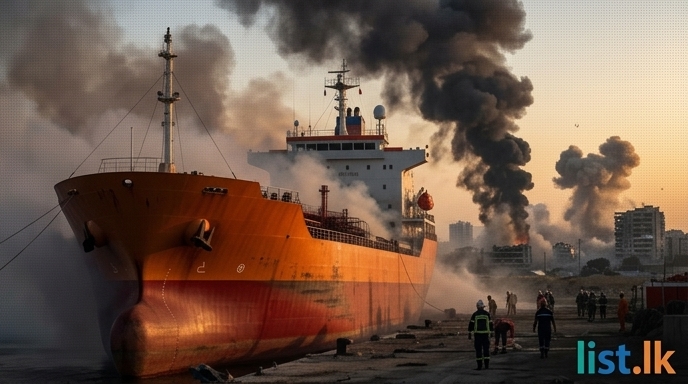
In response to the initial Israeli actions, Iran halted oil tanker traffic through the strategic Strait of Hormuz, a vital global shipping lane. The Iranian Revolutionary Guard Corps (IRGC) issued a stern warning, stating that any unauthorized passage would lead to destruction. Iran also claimed to have targeted the USS Abraham Lincoln and USS Tripoli, forcing them to retreat to the Indian Ocean. This closure of Hormuz occurred just hours after a ceasefire was declared between the United States and Iran, with Tehran accusing Israel of violating this agreement by simultaneously attacking Lebanese and Iranian territories.
Iranian President Masoud Pezeshkian condemned Israel's military actions as a "blatant violation" of the existing ceasefire agreement, warning that continued actions would undermine future peace talks. Iran's lead negotiator, Mohammed Bager Qalibaf, stated it would be 'unreasonable' to proceed with scheduled peace talks with the United States. Amidst these developments, Brent crude oil prices fell 13% to $95 following the temporary US-Iran ceasefire.
As the conflict continued, US President Donald Trump urged Israeli Prime Minister Benjamin Netanyahu to scale back strikes in Lebanon to avoid jeopardizing diplomatic efforts with Iran. While both the US and Israel maintained that Lebanon was not covered under the current US-Iran ceasefire, Israel agreed to be a "helpful partner." However, Netanyahu publicly declared there was "no ceasefire" in Lebanon and vowed to "continue to strike Hezbollah with force," even as he reportedly gave a positive response to Trump's request. The Israeli military issued evacuation orders for parts of Beirut, and Hezbollah reportedly launched rocket attacks in response to Israeli strikes. Reuters also reported the death of Ali Yusuf Harshi, the personal secretary and son-in-law of the Hezbollah leader, in an April 8 Israeli attack on Beirut, though Hezbollah has not confirmed this.
International calls for de-escalation grew, with France urging for Lebanon to be included in the ceasefire agreement, highlighting that the country was 'heavily destabilized' with 1 million people now displaced. Efforts towards a diplomatic resolution gained momentum when Israeli and Lebanese envoys held rare, direct talks in Washington, DC, aimed at discussing an end to Israeli attacks. Following these talks, Trump announced that the leaders of Israel and Lebanon were scheduled to speak directly for the first time in 34 years.
Despite earlier statements from a senior US official that the US had not demanded a ceasefire, Prime Minister Netanyahu reportedly met with his security cabinet to weigh a ceasefire agreement with Lebanon, and Hezbollah indicated a ceasefire could happen "soon." Concurrently, Israeli Defense Forces (IDF) Chief, Lieutenant General Eyal Samir, approved new war plans for continuous operations in Iran and Lebanon, claiming that operations with the US military had crippled Iran's defensive capabilities and that Iran should not be allowed to achieve victories on issues like the nuclear question or the Strait of Hormuz. The newly announced 10-day ceasefire is anticipated to temporarily ease these regional tensions.